OEM vs Aftermarket Crusher Wear Parts: What Buyers Should Know
Table of Contents
When a jaw plate or cone mantle wears out, the first question many buyers face is whether to reorder the original equipment manufacturer (OEM) part or look at aftermarket alternatives. The answer is not simply “OEM is better.” For most crushing operations, high-quality aftermarket wear parts — manufactured to match OEM dimensions and material specs — deliver the same fit and service life at a meaningfully lower cost.
What “OEM” and “Aftermarket” Actually Mean
- OEM parts are produced by (or for) the crusher’s original builder. You pay a premium that includes the brand, the supply chain and often the lead time.
- Aftermarket parts are produced by independent foundries to the same drawings and material grades. The good ones are OEM-equivalent, not “cheap copies” — they are cast, heat-treated and machined to the original dimensional and metallurgical specification.
We supply aftermarket replacement parts sourced from audited Chinese foundries, manufactured to meet or exceed the OEM specification for the crusher model you run.
Where the Real Differences Show Up
The part is only as good as what is verified before it ships. The differences that matter are not the logo on the box but:
- Material grade — Mn13Cr2/Mn18Cr2/Mn22Cr2 manganese, high-chrome iron, or martensitic steel, matched to your feed and duty.
- Dimensional accuracy — cavity profile, bolt holes and seat surfaces cut to drawing so the part installs first time.
- Heat treatment — proper quenching and tempering so hardness and toughness land in the right window.
- Traceability — a material test report (MTR) and batch record you can hold a supplier accountable to.
How to De-Risk an Aftermarket Order
- Send the part number, a drawing or a marked-up photo so the foundry confirms the profile before casting.
- Ask for the material certificate and, for critical parts, third-party inspection.
- Start with a trial order — many standard wear parts can be trialled from a single piece before you commit to a volume run.
- Work with a sourcing partner that owns specification, inspection and shipment, rather than a marketplace where the seller disappears after payment.
Matching Parts to Your Crusher
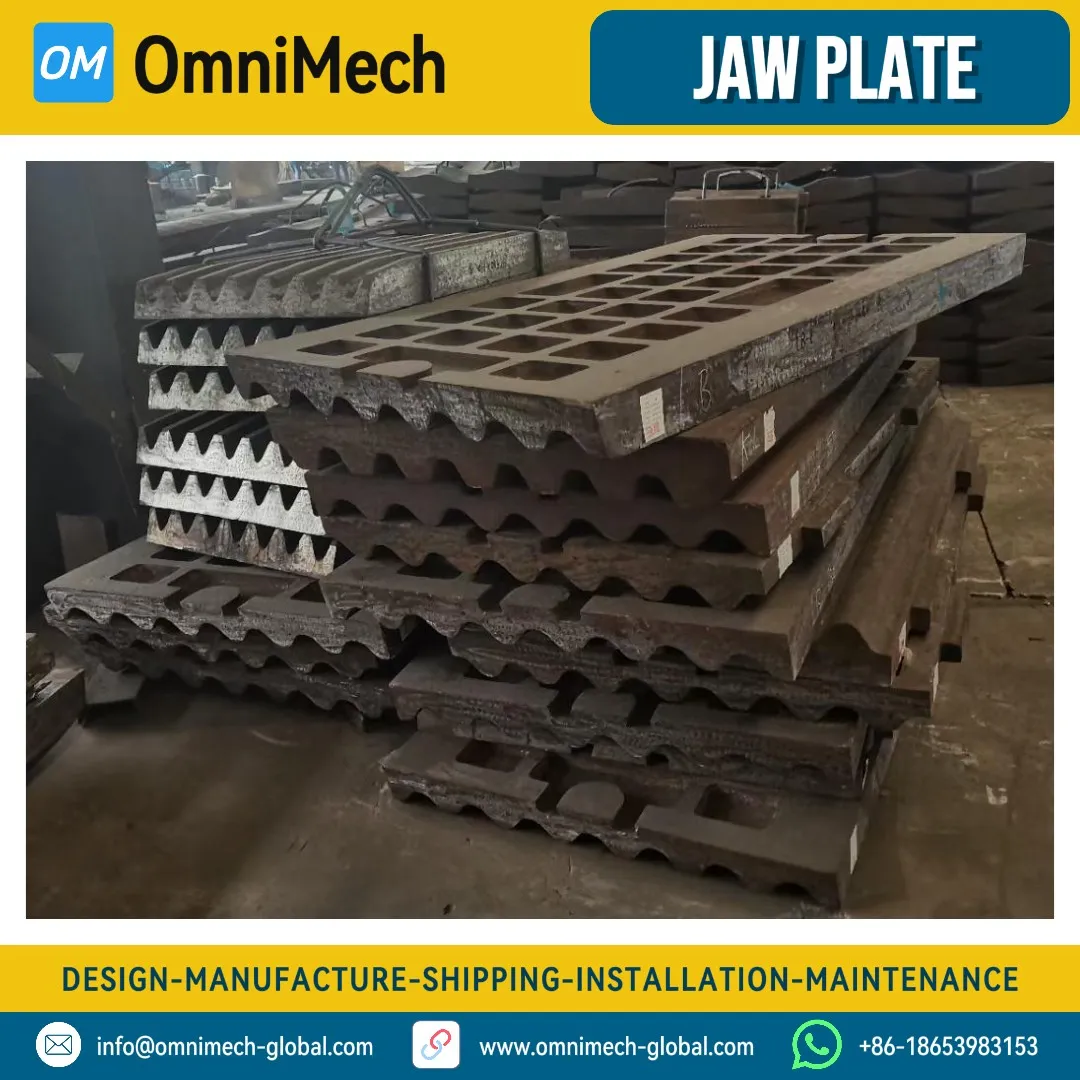
- Jaw crusher jaw plates — tooth profile and alloy selected to your feed size and abrasiveness.
- Cone crusher mantles and concaves — chamber profile matched to your crushing stage.
- Impact crusher blow bars — high-chrome or martensitic, matched to impact speed and feed.
- Hammer mill hammers — grade chosen for the wear mechanism in your rotor.
The Bottom Line
Aftermarket does not mean lower quality — it means you are no longer paying the OEM margin for the same specification. The risk is not the concept; it is the supplier. Verify the grade, the dimensions and the inspection, and aftermarket wear parts will perform to OEM-class standards while cutting your cost per ton.
Need an OEM-equivalent quote for your crusher?
Send your part number or drawing to [email protected]. Our technical team confirms material grade and cavity profile before we quote, so the part fits the first time.
Shop Crusher Wear Parts by Type
Aftermarket replacement wear parts for Metso, Sandvik, Symons and more — sourced from audited Chinese foundries. Browse all spare parts →
OmniMech Technical Team
Technical team at OmniMech. We match material grade and profile to the application, and confirm dimensions before shipment.